Skip to content
STEPS LAB

SaaS

Flowdesk

A product that started earning eight weeks after we began

Twenty-three companies said in writing they would pay for a tool that did not exist yet. Eight weeks later the founders had a working service rather than a pitch deck — and their first payments.
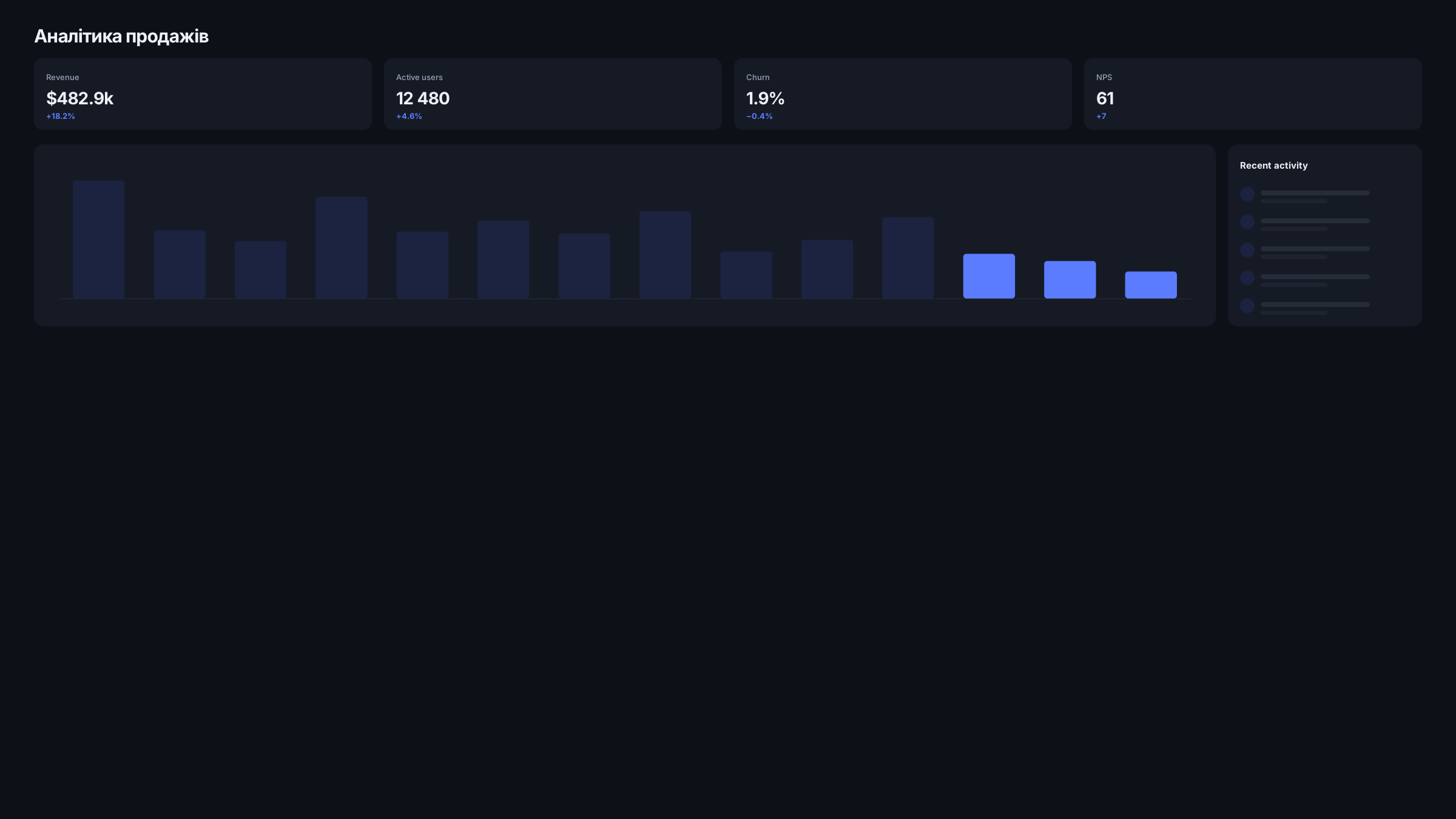
Flowdesk dashboard showing revenue, users and churn
Demonstration artwork

What was wrong

Demand was already proven: twenty-three service companies had confirmed in writing that they would pay. The product did not exist — not a line of it. Investor money closed in ten weeks, and what had to be shown was a working service, not slides.

The danger was not the deadline. In eight weeks it is easy to bolt together something you throw away and rewrite six months later — and then the fast start costs double.

  • 10 weeks to the deadline

    What had to be shown was a working service, not a clickable mock-up.

  • 23 companies already waiting

    Customers were ready to pay; there was nothing to pay for.

  • The risk of rewriting it all

    A product thrown together fast usually has to be built again.

What we did

The first week went into cutting, not building. Of twenty-one planned features, six made the first version — the ones without which nobody would pay. The rest were not thrown away: they went into a plan with dates, so nothing was lost and the founders could see when it would arrive.

Separation between companies and staff roles — who sees what, who can change what — went in from the start. That cost four extra days up front. It saved months when the first twenty-person client arrived: nothing had to be redone.

Getting to know the service became part of the service. A new user goes through four short steps and lands in a workspace that is ready to use rather than empty. That removed the most common reason people never come back after signing up.

What we cut and why

Every feature was judged by one question: would anyone refuse to pay without it. If not, it went into the plan for later.

A mobile app, customisable reports and connections to two popular CRMs did not make the first version. None of the twenty-three prospects named them as a condition of buying — and together they would have added at least a month.

  • Six things shipped

    The parts without which the service makes no sense — the parts people pay for.

  • Fifteen deferred

    Not "someday" — with actual dates in the plan.

  • About 5 weeks saved

    And met the investor deadline with two weeks to spare.

What it looks like

  • Demonstration artwork
    Main screen: the four numbers the team starts its day with.
  • Demonstration artwork
    First run: four steps that leave the service ready to use.
  • Demonstration artwork
    Tasks: stage, owner and deal value in a single card.
  • Demonstration artwork
    A table view for people who prefer a list to cards.

The result in numbers

Weeks from start to first payments
8

the plan was 10

ahead of the investor deadline

Companies subscribed
112

from the 23 who promised at the start

in the first month

Of the time the service is available
99,95%

the agreement was 99.9%

measured over 6 months

Figures from the actual project, not a rough estimate.

Tell us what you need

Two sentences is enough. We reply within one business day and tell you honestly whether we can help.